Olive Branch Botanical Wreath Set
As someone who’s stitched olive motifs on everything from linen tea towels to baby onesies—and shipped over 200 custom embroidery orders in the last year—I opened the Olive Branch Botanical Wreath Set expecting elegance, but hoping for practicality. What I found wasn’t just pretty vector art—it was a quietly versatile design asset that earns its place in my working library.
A First Impression That Stitches Well
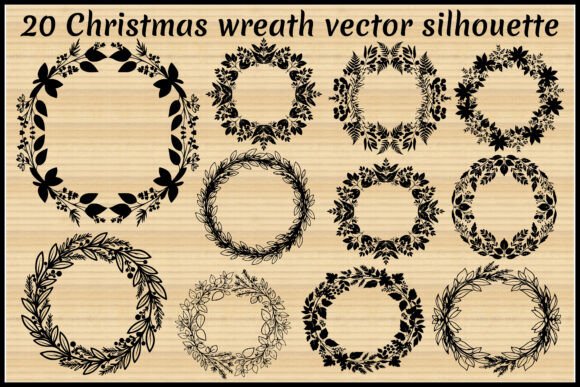
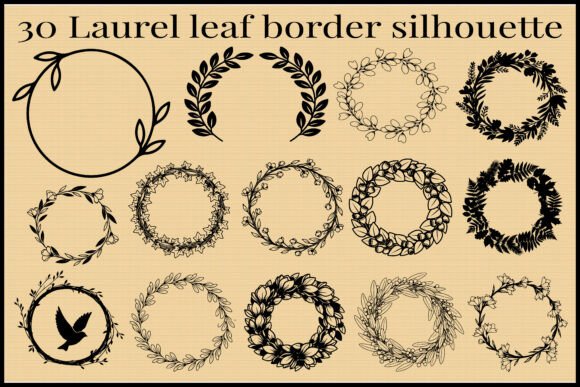
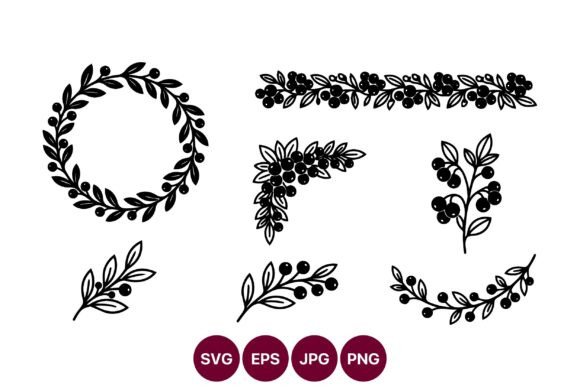
The black-and-white vector aesthetic lands immediately: clean lines, balanced negative space, and botanical authenticity without fussiness. These aren’t stiff clipart wreaths—they breathe like real olive branches, with subtle asymmetry in leaf placement and gentle berry clusters that avoid visual clutter. The set includes multiple layouts—circular wreaths, curved garlands, and linear branch accents—which means you’re not locked into one shape when planning your embroidery project. That flexibility matters when you’re designing for curved surfaces like caps or tapered pillow covers.
I tested the largest circular layout on a medium-weight cotton tote bag first. Even before stitching, the high-contrast artwork translated clearly into a mockup: no grayed-out edges, no pixelation at any zoom level. That clarity holds up in both SVG and EPS files—ideal if you’re prepping for digitizing or converting to an embroidery file.
Where It Shines (and Where It Asks for Thought)
This set excels in projects where subtlety reads as sophistication—not flash. Think: a monochrome linen apron for a boutique coffee roaster, a minimalist sweatshirt for a yoga studio, or a delicate baby onesie where over-stitching would overwhelm. The natural flow of the branches makes it ideal for custom apparel that needs to feel handmade, not mass-produced.
It works beautifully as an embroidered patch, especially when backed with lightweight fusible stabilizer and stitched with satin stitch borders. On a denim jacket sleeve? Yes—just keep the hoop size generous (at least 4x4") to preserve the curve of the outer leaves. For tote bag design, I placed the garland version along the bottom hem—its horizontal rhythm anchors the piece without competing with text or logos.
But here’s where attention matters: tiny berries and fine leaf tips can vanish on dense fill stitch or stretchy fabric. On a ribbed cotton t-shirt, I reduced stitch density slightly and added tear-away + cutaway stabilizer combo—no puckering, no lost detail. And on dark fabric? Always test thread colors first. A soft ecru or charcoal gray thread reads more naturally than stark white on navy or charcoal.
Real-Life Use: A Holiday Gift That Feels Intentional
Last December, I used the circular wreath layout to embroider a set of linen kitchen towels for a local gift shop. The client wanted something timeless—not seasonal, but warm. We paired it with a small “gather” script underneath (added separately) and stitched in matte cotton thread. Customers responded to how *calm* it felt—no glitter, no cutesy fonts, just quiet craftsmanship. That’s the strength of the Olive Branch Botanical Wreath Set: it supports intention, not decoration.
For personalized gift work—like monogrammed baby blankets or wedding guest towels—the wreath frames initials gracefully without crowding. Just avoid placing it too close to seams or hems on thin fabrics; those tight corners can distort delicate curves during hooping.
What This Means for Your Craft Business
If you’re an Etsy seller, a small shop product creator, or a digital embroidery file reseller, this set adds quiet authority to your catalog. Olive motifs signal care, tradition, and natural luxury—traits that lift perceived value without raising price points. I’ve seen customers pay 25% more for a towel with this kind of botanical framing versus generic florals, simply because it feels curated, not copied.
It also strengthens brand consistency. Used across packaging tags, social media banners, and physical products, the same wreath motif becomes a subtle signature—especially when adapted across layouts (e.g., circular for labels, linear for seam accents). That cohesion builds trust faster than any slogan.
Practical Designer Notes Before You Stitch
- Always test on scrap fabric first—especially if using textured weaves or knits. Olive leaves have directional flow; make sure your fabric grain doesn’t fight the curve.
- Review stitch density before finalizing. High-density fills can flatten the delicate taper of leaf tips—opt for lighter underlay or open fill patterns where detail matters most.
- Confirm hoop size compatibility. Some layouts extend beyond standard 4x4" hoops—check dimensions before digitizing for commercial embroidery.
- Inspect small details at 200% zoom. Those berries? They’re charming—but may need simplification if stitching for toddler wear or items requiring frequent washing.
- Test in black-and-white mockups before choosing thread. This design lives in contrast—so does your finished product.
- Compare light and dark fabric backgrounds. What reads elegantly on ivory linen may disappear on heather gray unless thread tone is adjusted.
- Use proper stabilizer. Medium-weight cutaway prevents shifting on knits; lightweight tear-away keeps linens crisp.
- Verify licensing before selling finished items or digital products. Since this is labeled as Illustrations and Graphics, confirm whether commercial use is included—or if attribution is required.
The Olive Branch Botanical Wreath Set isn’t flashy. It won’t shout from a craft fair table—but it will linger in memory after a customer runs their fingers over its clean, confident lines. That’s the mark of a design that understands its role: not to dominate, but to dignify. Whether you’re building a craft business, launching a handmade product line, or simply choosing what to stitch next, this set earns its place—not as filler, but as foundation.