Farmer’s Market Glow Vector Art: Graphics & Illustrations
First Impression: Warm, Wholesome, and Instantly Recognizable
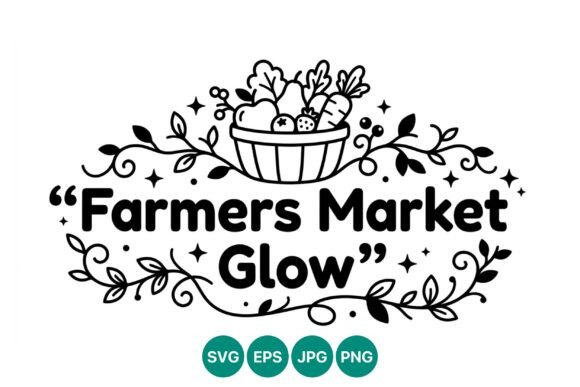
Opening the ZIP folder for Farmer’s Market Glow Vector Art, I immediately felt its quiet confidence—black and white vector art featuring the phrase “farmers market glow” wrapped in a basket of fruit and delicate leafy swirls. It doesn’t shout; it invites. The mood is grounded yet luminous—evoking freshness, community, and slow-seasonal joy. For brand owners and content creators building lifestyle-focused campaigns (think farm-to-table subscriptions, wellness coaching, or handmade food product launches), this graphic design asset lands with emotional precision. It feels handmade but polished, rustic but intentional—ideal for small business branding that values authenticity over sterility.
A Real Campaign Fit: Launching a Seasonal Produce Box Subscription
We recently used Farmer’s Market Glow Vector Art to refresh the visual identity for a new seasonal produce box service targeting urban professionals seeking local, sustainable groceries. Instead of starting from scratch, we anchored the entire campaign around this illustration: as the hero graphic on the website header, the central motif in Canva templates for Instagram Stories, and the decorative accent on printable packaging inserts. Its clean vector structure scaled flawlessly—from 4K web banners down to 600px Pinterest pins—without losing clarity or charm. That versatility is rare in editorial design and digital ads alike.
Where It Strengthens Brand Identity and Marketing Visuals
- Logo design: Not as a standalone logo, but as a supporting icon in wordmark lockups or app icons—especially when paired with a warm serif or friendly sans serif font.
- Packaging design: Perfect for kraft paper labels, reusable tote bags, or compostable mailer stickers—its black-and-white contrast pops without ink cost concerns.
- Social media graphics: Works powerfully in Instagram carousels and Facebook ads where warmth and approachability drive engagement and audience trust.
- Blog graphics & email banners: Adds visual hierarchy to otherwise text-heavy content marketing—guiding the eye while reinforcing brand voice.
- Printable design & lead magnets: Scales beautifully for PDF guides like “5 Ways to Shop Your Local Farmers Market”—enhancing perceived value without clutter.
- Digital product visuals: Used in mockups for Canva templates, Notion planners, or printable meal planners aimed at health-conscious creators.
What This Graphic Design Asset Delivers—Beyond Aesthetics
Farmer’s Market Glow Vector Art supports core marketing goals in subtle but measurable ways. Its balanced composition improves visual hierarchy—making “glow” the emotional anchor, not just a word. Its organic lines reinforce credibility for small business branding rooted in real people and real places. Because it’s built as an SVG design, it retains crispness across devices, contributing to a professional branding impression that builds audience trust faster than pixelated alternatives. In competitive spaces—like wellness, food entrepreneurship, or sustainable living—it helps your campaign visuals feel more memorable, more human, and less algorithmically generic.
Best Places to Deploy This Illustration
This isn’t background filler—it’s a strategic visual cue. Use it most effectively in hero graphics for landing pages, campaign headers for email sequences, product launch visuals for limited-edition bundles, and branded templates shared across teams. It shines as a social media cover on Facebook or LinkedIn, adds texture to editorial layouts in Substack newsletters, and elevates content bundles sold on Gumroad or Payhip. As a decorative brand element, it softens sharp corners in modern design—giving digital ads and web design a gentle, approachable rhythm.
Where to Proceed With Intentional Restraint
While versatile, Farmer’s Market Glow Vector Art shouldn’t be forced into contexts where its warmth competes with clarity. Avoid using it in formal corporate branding (e.g., B2B SaaS pitch decks), dense information layouts (like comparison tables or legal disclaimers), or small mobile graphics under 200px wide—where detail in the leafy swirls may blur. It also risks visual noise against low-contrast backgrounds or in text-heavy ads where readability must dominate. If your brand leans into ultra-minimalist or monochrome aesthetics, test it carefully before committing—it thrives in layered, tactile environments, not stark voids.
Practical Brand Designer Notes You’ll Want to Run
- Test it against your full brand color palette—does it retain impact in grayscale? Does it harmonize with your primary accent tones?
- Drop it into real campaign mockups: website headers, Instagram post frames, and email banner dimensions—not just isolated previews.
- Preview on mobile screens: does the fruit basket remain legible at thumbnail size?
- Compare it side-by-side with competitor visuals—is it distinct enough to stand out in crowded feeds?
- Pair it with your brand fonts: try serif (for tradition), sans serif (for clarity), script (for handcrafted tone), and display fonts (for bold campaign moments).
- Review spacing and balance—does it leave breathing room around your CTA or headline, or does it crowd the message?
- Confirm commercial license terms—especially if using in client work, paid digital ads, or physical merchandise.
Final Thought: A Thoughtful Addition to Any Creative Marketplace Toolkit
Farmer’s Market Glow Vector Art isn’t flashy—but that’s its strength. In an era of visual overload, its quiet sincerity cuts through. For bloggers, online coaches, product creators, and creative entrepreneurs building authentic connections, it’s more than clipart or illustration—it’s a storytelling device. When deployed with intention, it reinforces brand identity without overshadowing your message. Whether you’re designing packaging for a new jam line or refreshing your Pinterest strategy for a gardening course, this SVG design, PNG design, and EPS-ready asset delivers consistent, scalable, emotionally resonant value. Just remember: great design assets don’t replace strategy—they amplify it.